
Strategy
Formulate, implement, and adapt goals with the people responsible for doing the work.
Strategy Research Institute
Research across dozens of studies shows how managing the work of people collaborating in parallel creates valued products faster, cheaper, and better. The methods apply from research laboratories to product development, manufacturing, suppliers, and services.
Responses are anonymous at the stakeholder level. About 20 minutes to complete.
Research supported by more than 100 corporations in America, Europe, and Asia


















What we do
Research findings
Figure
Innovation
Time and cost
| Outcome | % of variation explained |
|---|---|
| Innovation | 70% |
| Time and cost | 65% |
Figure
Diagnostic
The SPOT composite model predicts multiple performance advantages simultaneously: time compression, cost reduction, quality, and sales from profitable new products. These outcomes form the performance diamond, with no need to trade one against another.
Benchmarking identifies gaps against Best-in-Class standards. The BIG BANG score then ranks those gaps so teams can pursue the changes most likely to improve performance.
Explore the SPOT diagnosticFormulate, implement, and adapt goals with the people responsible for doing the work.
Use disciplined but flexible methods to design and produce customer offerings.
Bring diverse specialists together early, empowered to make product decisions throughout the development cycle.
Extend human capability for design, communication, and production.
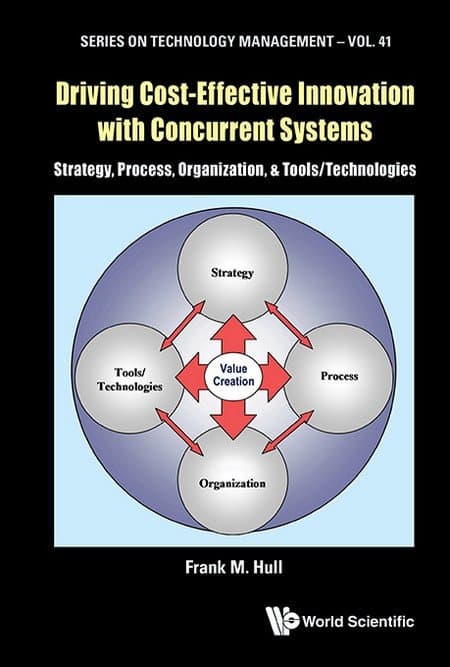
The book
“Analyses of dozens of studies show how managing the work of people collaborating in parallel creates products faster, cheaper, and better in any organization.”
Membership
A non-profit association for sharing concurrent practices that improve enterprise performance. Members meet in conferences, a leadership forum, and courses, and identify new practices for SPOT Database V.